
Q&A with Yannick Malalanirina
Summer Series. Understanding human behaviors to develop inclusive public policies
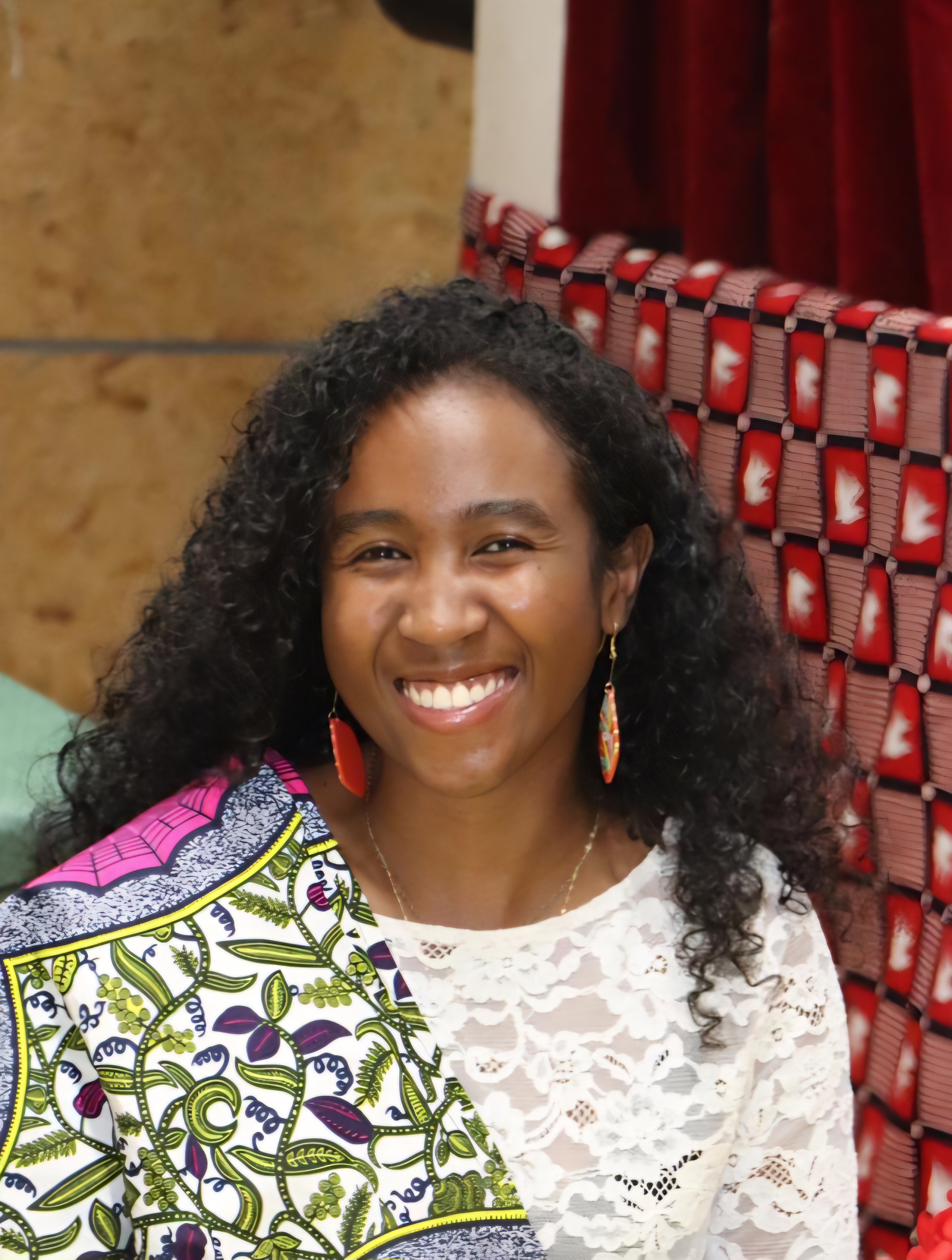
Yannick Malalanirina is a PhD candidate in economics at the Université Clermont Auvergne, she is doing her doctoral studies in our department. Her research focuses on gender equality and its implications for education and employment, as well as on gender-based violence. She analyzes how institutions and others actors could reduce gender inequality and promote inclusivity.
This year, you spent months at OECD. Can you tell us more?
Yes, I just came back from Paris. I was a research intern at the Inclusive Development Partnerships Division at the OECD Development Centre, I was working in the Gender and Development Unit, under the supervision of Hyeshin Park, the Head of Unit. I mainly contributed to projects on masculine norms. My main tasks were on the Masculinity and Gender Equality report: data analysis, data visualization, writing, and conceiving dissemination products. I also assisted the team in the preparatory phase of the next edition of the Social Institutions and Gender Index (SIGI), helping on data collection. I am exploring topics at the crossroads of research and public policy in my doctorate. This experience is very important for me as it brings new perspectives to my research on the issues at stake.
I particularly enjoy going on the field to conduct surveys and project evaluations with local actors. I am also involved in evaluating Ampi’Zay, a programme promoting gender equality through sport, as part of the PAIRES project (AFD-IRD). It's a great opportunity for me to go on the field regularly to coorganize and supervise surveys, collaborate with local stakeholders, and also meet the young people whose behaviour I study. This is great to confront theoretical knowledge to reality.
We, PhD candidates are very busy. We have a large range of activities. I am also an assistant lecturer at the University and I have also had the opportunity to co-lead a workshop with middle school students to introduce them to the work of a researcher as part of the Fête de la science. That's what I love about being a PhD candidate, I can move from one "universe" to the other: from analyzing data to fieldwork, from collaborating with institutions and NGOs to teaching, sharing my knowledge, and sparking an interest in research. This is what makes my activities rich and stimulating.
Can you take us through your academic journey?
I obtained a BA in economics at the Université Catholique de Madagascar, before coming to Clermont-Ferrand to study at the School of Economics of the Université Clermont Auvergne. I earned a double master degree through the Magistère program: economic analysis and development project analysis.
During those years, I developed a passion for research. Progressively, I came to microeconomics, it's a branch of economics that explore our behaviours, try to better understand and quantify them, and also observe how public policies really work and measure their impact on the populations.
I am particularly interested about the challenge of measure in social sciences. It's about humans, you cannot always observe and measure a phenomenon, but you try. Plus, some issues are particularly sensitive. Doing research means finding the tools to make invisible phenomenons perceptible. The key steps are: better measure, better understand to identify them, to better evaluate public policies, and contribute to define efficient political response afterwards.
My craving to understand economic and social realities from data and keep going on the field often, that's what brought me here at CERDI.
This year, CERDI celebrates his 50 years anniversary. Can you tell us why you chose this department to pursue your PhD?
I applied to the Clermont International Development Hub scholarship because I wanted to join the CERDI, a department known internationally for his research on development and economic issues in the Global South. I knew it will be a simulating environment to conduct my PhD studies.
I had a glimpse of it while studying at the School of Economics. I met some of the researchers with whom I shared common interests. I wanted to work with them. I am very glad to collaborate with Francesca Marchetta (UCA, CERDI) and Hugues Champeaux (GATE LSE, Université Jean Monnet Saint-Etienne). They both have an extensive expertise on gender issues.
It also gave me the chance to conduct my research as I mentionned earlier. I participated to a large-scale survey and to the evaluation of a sport program that aims at changing youth behaviours and attitudes in Madagascar. I have collaborated with academics, NGOs, associations, and civil society organizations. I have developed measuring tools for sensitive issues like gender-based violence.
This is what I like at CERDI: Being able to work on ambitious impact research projects, and still, stay connected with the reality and the need of stakeholders. That's why, I can't wait to celebrate the anniversary with the team in October.
Follow her on LinkedIn