
Q&A with Vincent Kambou
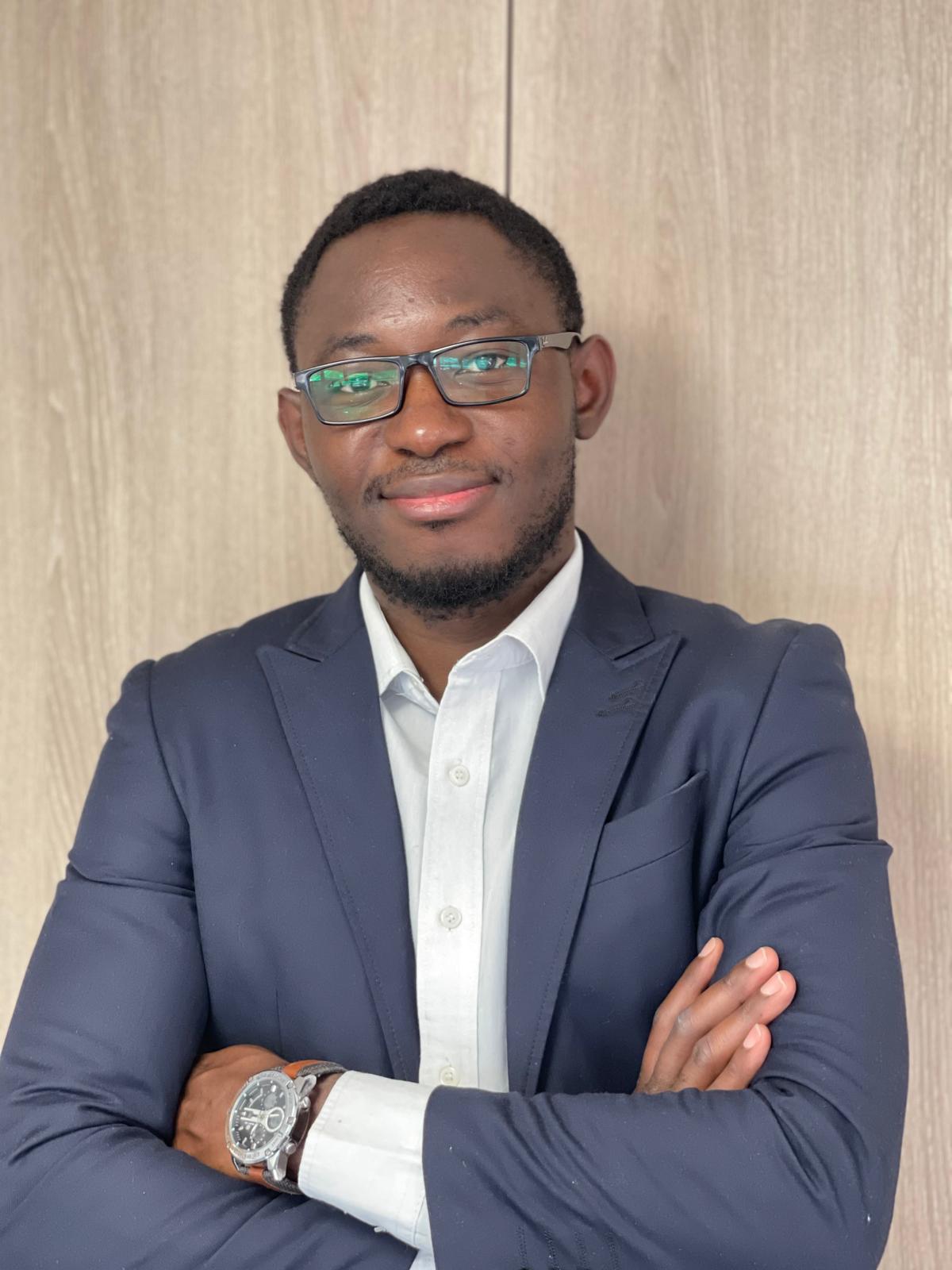
Summer Series. Vincent Kambou, Sovereign Debt Specialist
Vincent Kambou is a PhD candidate in Economics. He is back from a research stay in the US where he was welcomed by the Global Development Policy Center, one the most renowned research department in the field.
This year, you spent months at the University of Boston. Can you tell us more?
Yes, I was lucky to spend nine months at the Global Development Policy Center, a research department of the University of Boston. I joined the team of the Global Economics Governance Initiative (GEGI), which is known for its expertise in economic governance and international financial policy. There, I worked on the financing needs of the balance of payments for highly vulnerable countries, mainly those exposed to climate shocks. I wanted to understand how climate hazards deteriorate external accounts and how they can quickly come out of liquidity crisis. I studied a panel of 74 vulnerable countries. My work contributed to the discussions conducted with the V20, a club of the most vulnerable countries. The idea is to create a “lifeline”, a kind of mechanism that will provide financing to help countries recover quickly after a shock. I am really proud to see that my research work is directly discussed in strategic meetings on economic policy. Also, I am glad to contribute to the emergence of efficient political solutions.
I also developed another project on financial transparency and its implications for the accumulation of payment delays. All these works are related to the research I conduct at CERDI.
This is a great moment for me in my academic and professional journey. One of the chapters of my PhD thesis was published this month in the IMF Working Papers Series. In the paper, we analyze how debt composition and the seniority of creditors influence sovereign risk. One of the main findings is that the creditor’s identity and the structure of the debt play a major role in the perception of risk and the offered financing conditions to face it.
Can you tell us more about your academic journey?
I first obtained a master’s in development economics at the Université d’Abidjan before joining the Université Clermont Auvergne, where I earned a master’s in public finance from the School of Economics. As well as a teaching qualification in mathematics obtained in Côte d’Ivoire through a government program. Next, I chose to pursue a PhD at CERDI. My research is supervised by Samuel Guérineau (CERDI, UCA) and Marin Ferry (Université Gustave Eiffel).
This year, CERDI is 50! Why did you choose to do your PhD here?
I am very glad that I chose this department. Since I started my doctorate, I have benefited from the constant support of my supervisors. This is a great and stimulating environment.
Choosing this specific department was a natural choice. Previously, I worked at FINEXEM Emerging Markets, a consulting firm specializing in sovereign debt. I started working there just after the COVID-19 crisis, when the Debt Service Suspension Initiative (DSSI) was introduced. Then, many developing countries were trying to deal with the increasing tensions over debt: some were experiencing liquidity crises, and others insolvency issues.
That experience reinforced my interest in this topic, and more widely in development financing. That’s what ultimately led me to academia and CERDI, a department that has a long-established expertise on those issues. And, I will be delighted to celebrate its jubilee on Oct. 7.
Follow him on LinkedIn
Publications scientifiques
De Paul Kambou, S. V. (2025). Debt relief instruments and external debt dynamics following natural disasters in developing countries. International Economics, 184, 100624. https://doi.org/10.1016/j.inteco.2025.100624.
Chiara Ferrero, Sansan Vincent de Paul Kambou, and Kady Keita. "Creditors’ Seniority and Sovereign Risk: Evidence from Debt Composition", IMF Working Papers 2026, 161 (2026), accessed 17/08/2026, https://doi.org/10.5089/9798229053501.001.